The Power of One: Why Unilateral Training is the Missing Piece in Your Routine
 Jen Landry
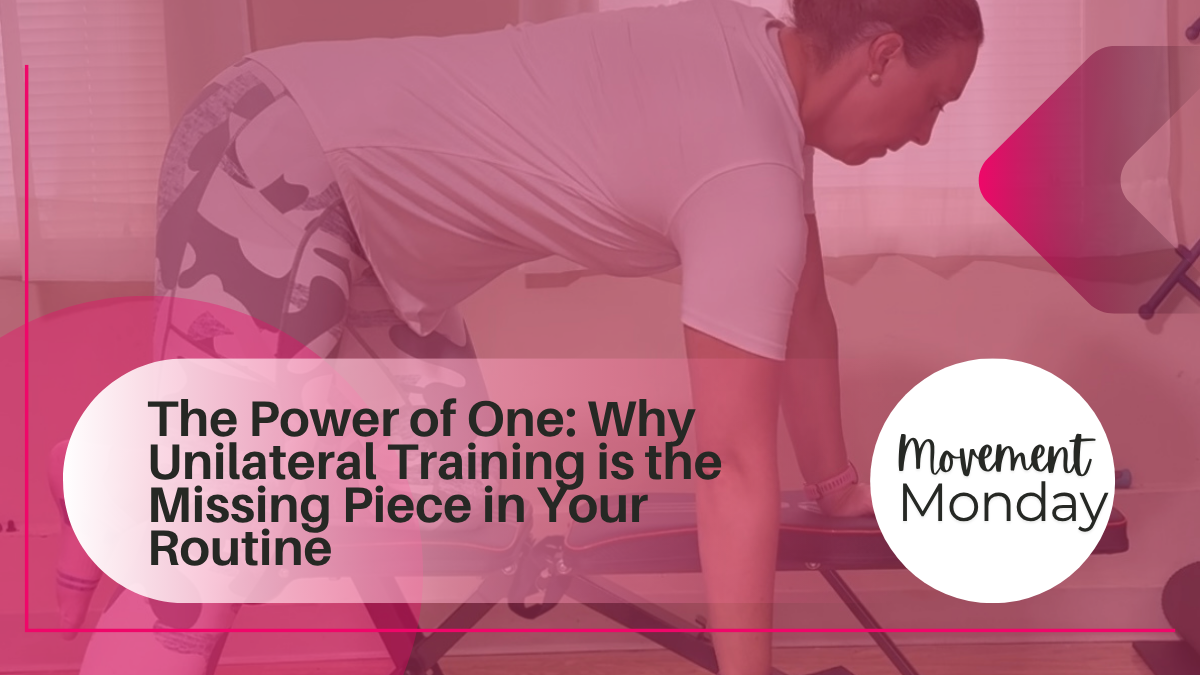
Stop ignoring muscle imbalances! Learn why unilateral training is the key to functional strength and why your sides need different coaching cues.
We love symmetry in the fitness world.
We want our squats to be perfectly level, our overhead presses to be mirror images, and our lat pull-downs to look like a synchronized swimming routine. Because of that, most of us stick to bilateral training—exercises where both sides of the body work together to move one load.
Don't get me wrong: bilateral work is great for building raw strength and moving heavy weights. But if that’s all you’re doing, you’re likely hiding some major imbalances—and your dominant side is probably a total glory hog.

The "Dominant Side" Takeover
Our bodies are naturally asymmetrical (and if you’ve spent years carrying a toddler on one specific hip, you know exactly what I mean). When we do a double-sided move, the "strong" side loves to jump in and do 60% or 70% of the work. You’re getting the reps done, sure, but you isn't actually addressing the root cause of why one side feels "off".
This is where unilateral (single-sided) training comes in. When you switch to a single-arm lat pull-down or a single-leg hinge, there is nowhere for that dominant side to hide.
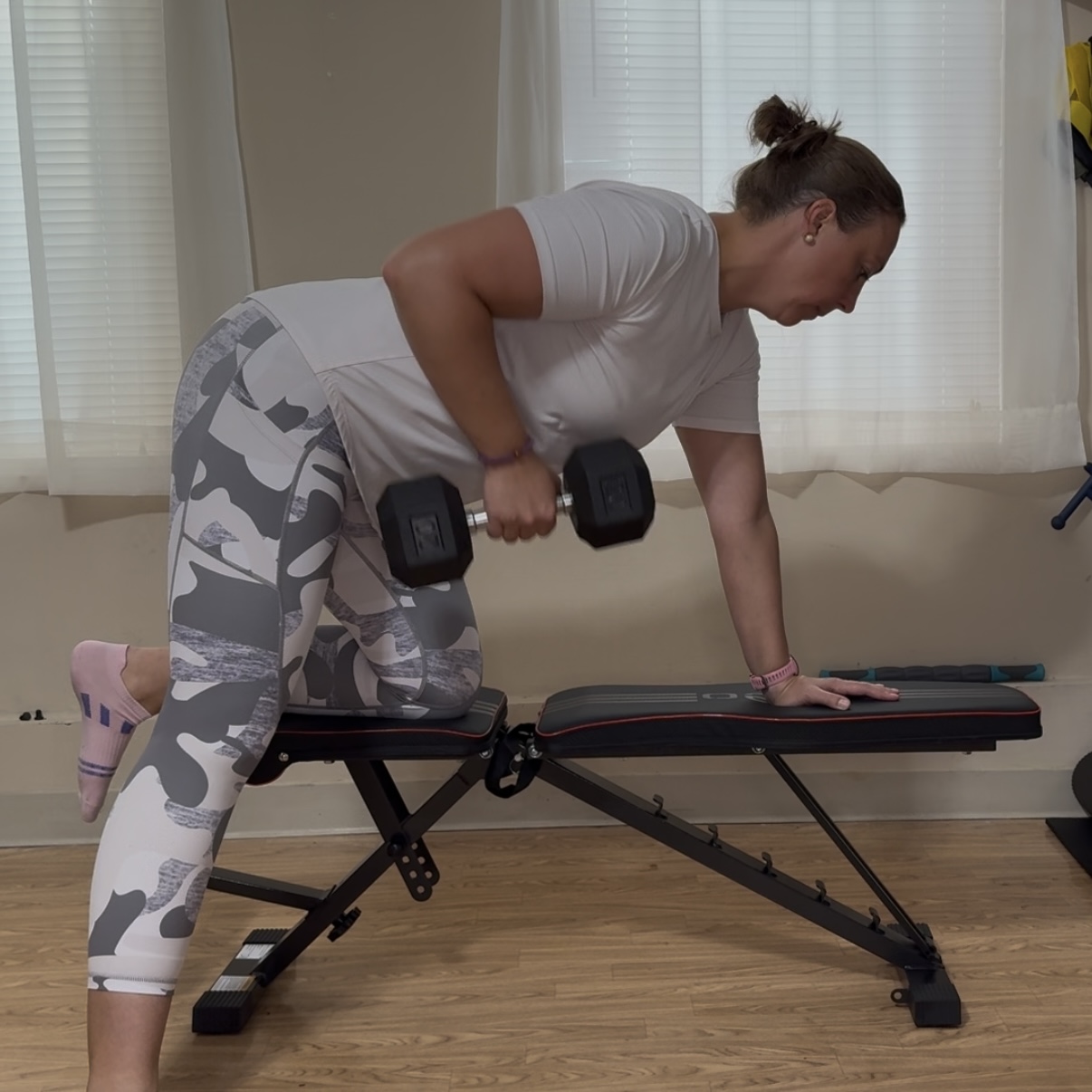
Why One Side Needs a Different "Language"
The biggest mistake I see? Trying to force your "weak" side to move exactly like your "strong" side. We aren't robots, and we shouldn't train like them.
As a PCES, I look at movement through a functional lens. If your right hip feels great in a standard hinge but your left side feels "stuck" or disconnected, don't just push through it (that’s how we end up with the "broken" feeling many moms describe).
Your sides might actually need different strategies:
- Different Cues: One side might need a specific 360 breathing cue to manage intra-abdominal pressure properly, while the other side just "gets it".
- Props: You might find one side needs a boost from a yoga block or an elevated position, but the other side needs a band for feedback or tension.
- Individual Positioning: Your left foot might need a slight "kickstand" or a different angle to help you actually feel the muscle engage.
The Goal: A Grandma Who Can Lift Things
I’m not interested in "bouncing back" or hitting a specific aesthetic. I want you to be able to play tag, swim with your kids, and lift heavy groceries without worrying about "accidents" or back pain.
By treating each side as an individual, you’re performing corrective maintenance on your body so it can handle real life—the messy, un-symmetrical, toddler-carrying real life.
This week’s challenge:
Swap one bilateral move for a unilateral version. Pay attention to the subtle differences. Does one side need a little more "boring" breath work? Does the other side need a different stance? Listen to the feedback your body is giving you.
I have read and agree to the terms & conditions.