Struggling with back pain when squatting? Here’s what you need to know and how to prevent it from stopping you.
If you’ve been told to avoid squats after having a baby, I have some good news:
Squats aren’t the enemy.
In fact, when done correctly, they are one of the best tools for rebuilding your glutes, stabilizing your pelvis, and protecting your pelvic floor.
The "scary" reputation of squats usually comes down to one thing:
Pressure management.
If your back aches every time you sit low, or if you feel a "pulling" sensation in your core, your body isn't broken—it’s just compensating. Let’s look at how to stop the "mom-back" ache and get you moving with confidence again.
When these three don't communicate, the pressure has to go somewhere. Usually, it leaks into your lower back or pushes down on your pelvic floor. This often looks like:
The "Butt Wink": Tucking your tailbone under at the bottom.
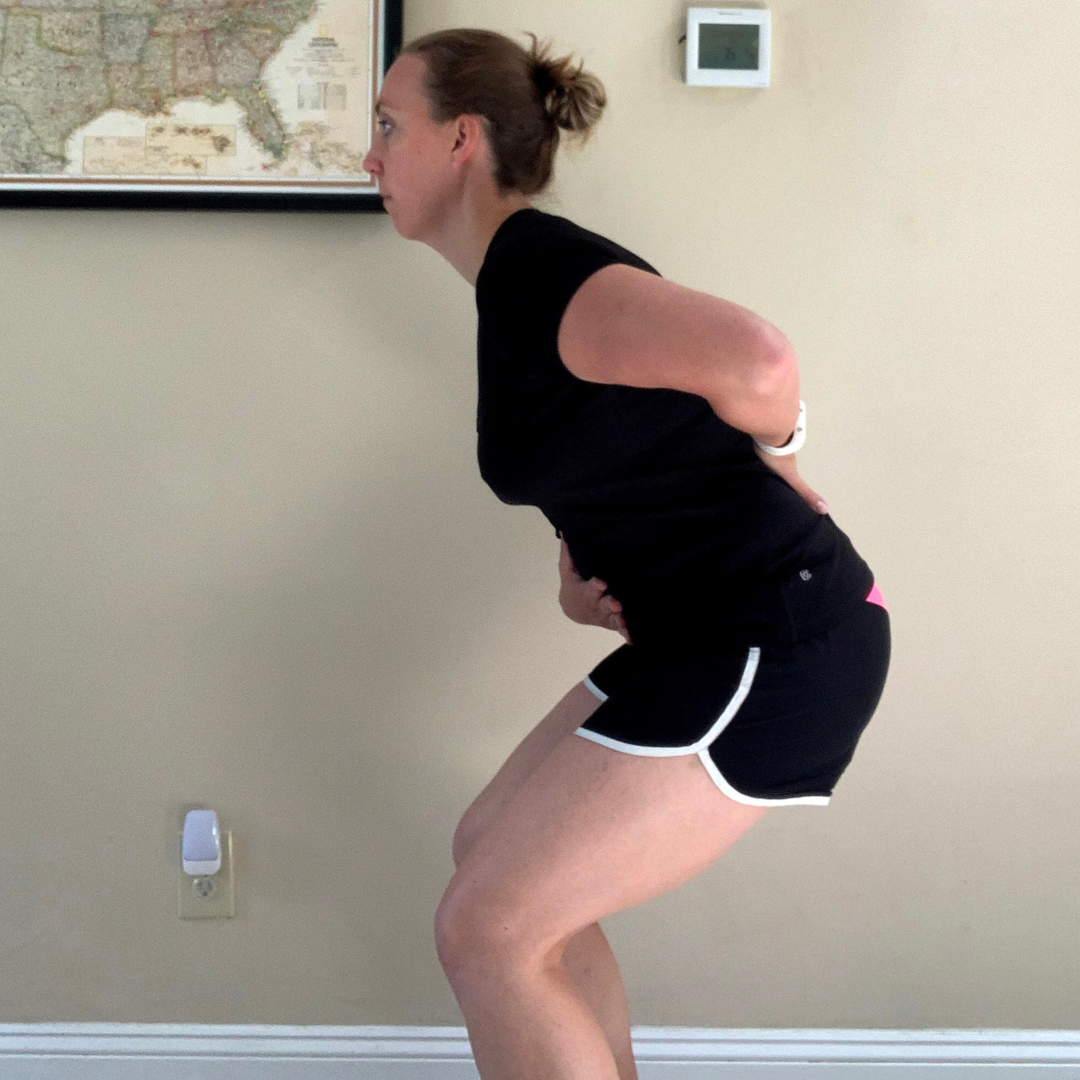
The "Rib Flare": Arching your back so much your ribs point toward the ceiling.
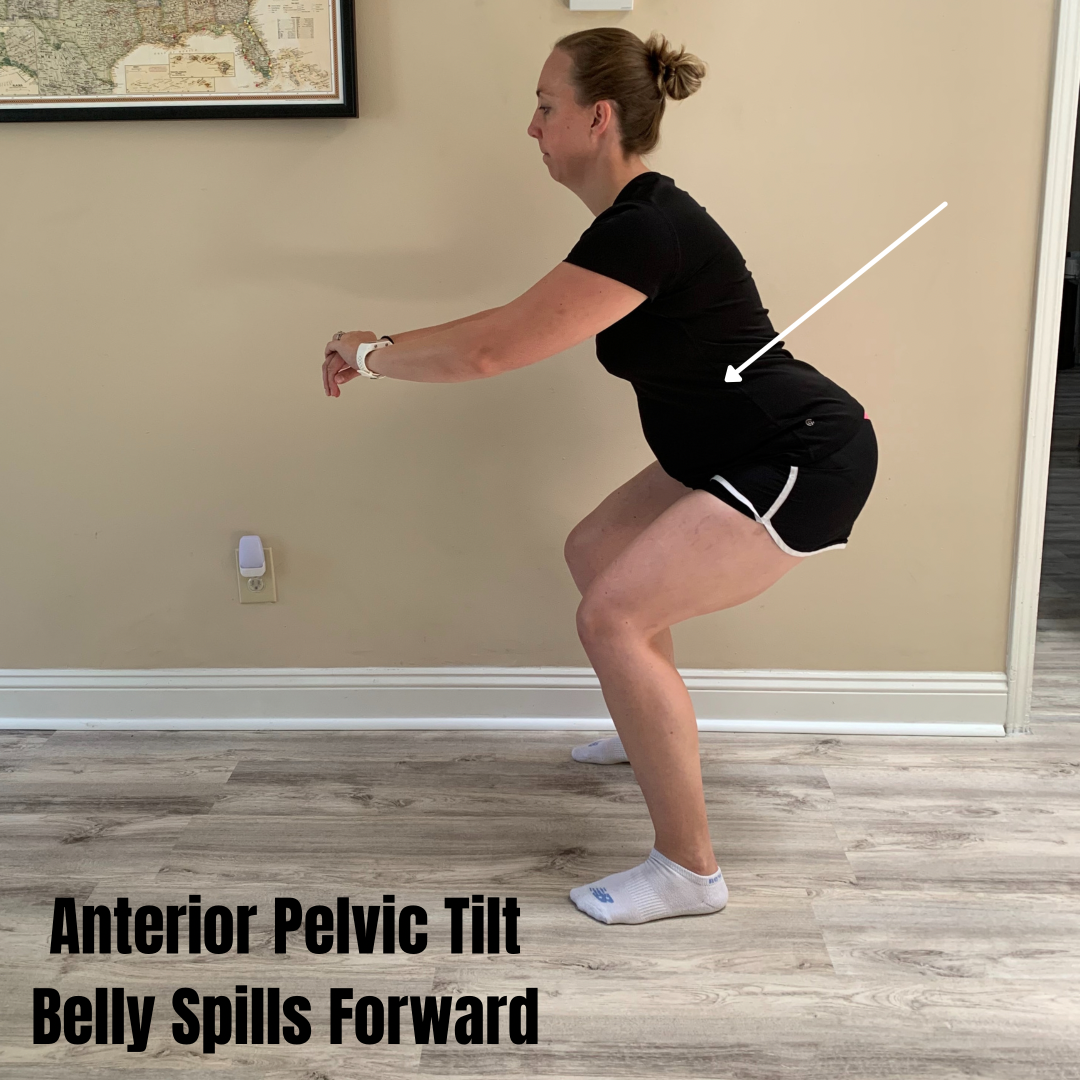
The "Belly Push": Bracing so hard your Diastasis Recti (DR) bulges outward.
3 Steps to a Pain-Free Postpartum Squat
1. Stack Your "Cans"
Before you even descend, check your alignment. Imagine your rib cage and your pelvis are two halves of a soda can. If the ribs are flared up or the pelvis is tilted too far back (Anterior Pelvic Tilt), the "can" is buckled.
The Fix: Gently exhale to knit your ribs down toward your hip bones. Keep your gaze forward, not at the ceiling.
2. Ground Your Foundation
Your feet are your core’s first point of contact with the ground.
Don't shift to your heels: This shuts off your glutes and puts the load on your back.
The "Tripod Foot": Press your big toe, pinky toe, and heel into the floor simultaneously. This creates a "rooting" effect that automatically wakes up your pelvic floor.
3. Breathe Through the "Sticky" Part
The hardest part of a squat is the transition from the bottom back to standing. This is where most women "hold their breath" and create massive internal pressure.
The Pro Tip: Use the "Exhale on Exertion" method. Start your exhale just before you start to stand up. This lifts the pelvic floor and supports your core when you need it most.
Try This: The 2-Minute Form Check
Before you add weight, try these two self-tests to see where your "leaks" are:
Test
What to do
What to look for
The Rib-to-Hip Check
Place thumbs on lower ribs, fingers on hip bones.
Do your hands move further apart as you squat? If yes, your back is over-arching.
The Pressure Check
Place one hand on your belly, one on your low back.
Do you feel your belly "poof" out against your hand? If so, try a sharper exhale on the way up.
The Bottom Line
You aren't doomed to live with back pain, and you don't have to quit squatting. It’s about meeting your body where it is today—not where it was pre-pregnancy. Start with bodyweight, focus on the "stack," and listen to what your body is telling you.
Ready to Get Back Under the Bar?
If you're still feeling "heavy" in your pelvic floor or your back pain isn't budging, you don't have to figure it out alone.
This website uses cookies. Using this website means you are ok with this but you can learn more about our cookie policy and how to manage your cookie choices here
 Jen Landry