Hands and Knees Breathing With a Hamstring Drag: Why This Exercise Matters Postpartum
 Jen Landry
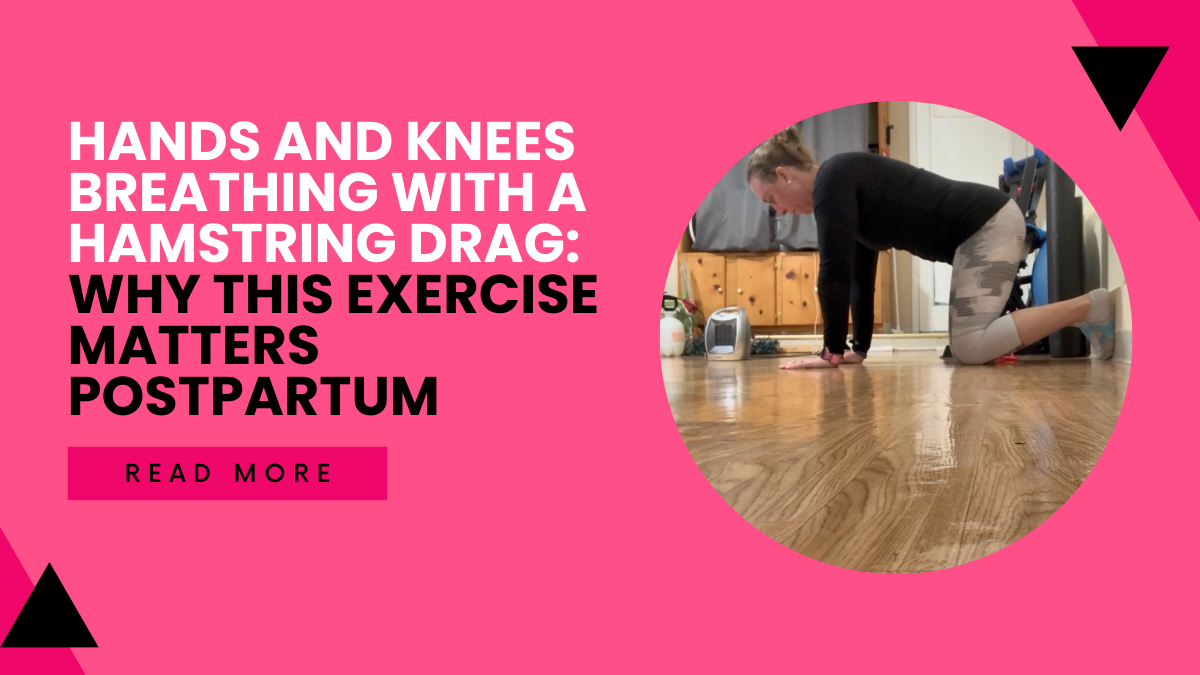
Learn how hands and knees breathing with a hamstring drag supports postpartum core, pelvic tilt correction, and low back support.
One of the most common things I see with postpartum clients is a disconnect between the pelvis and the core.
It’s not that they’re weak — it’s that the muscles meant to support the pelvis aren’t working together yet.
Hands and knees breathing with a hamstring drag is an exercise I use often to rebuild that connection in a simple, controlled way.
Why the Pelvis Needs Support From Both Sides
The pelvis is supported from the front and the back.
- From the back: the hamstrings help control pelvic position and prevent excessive arching.
- From the front: the lower abs and deep core muscles (especially the transverse abdominals) help stabilize the pelvis and spine.
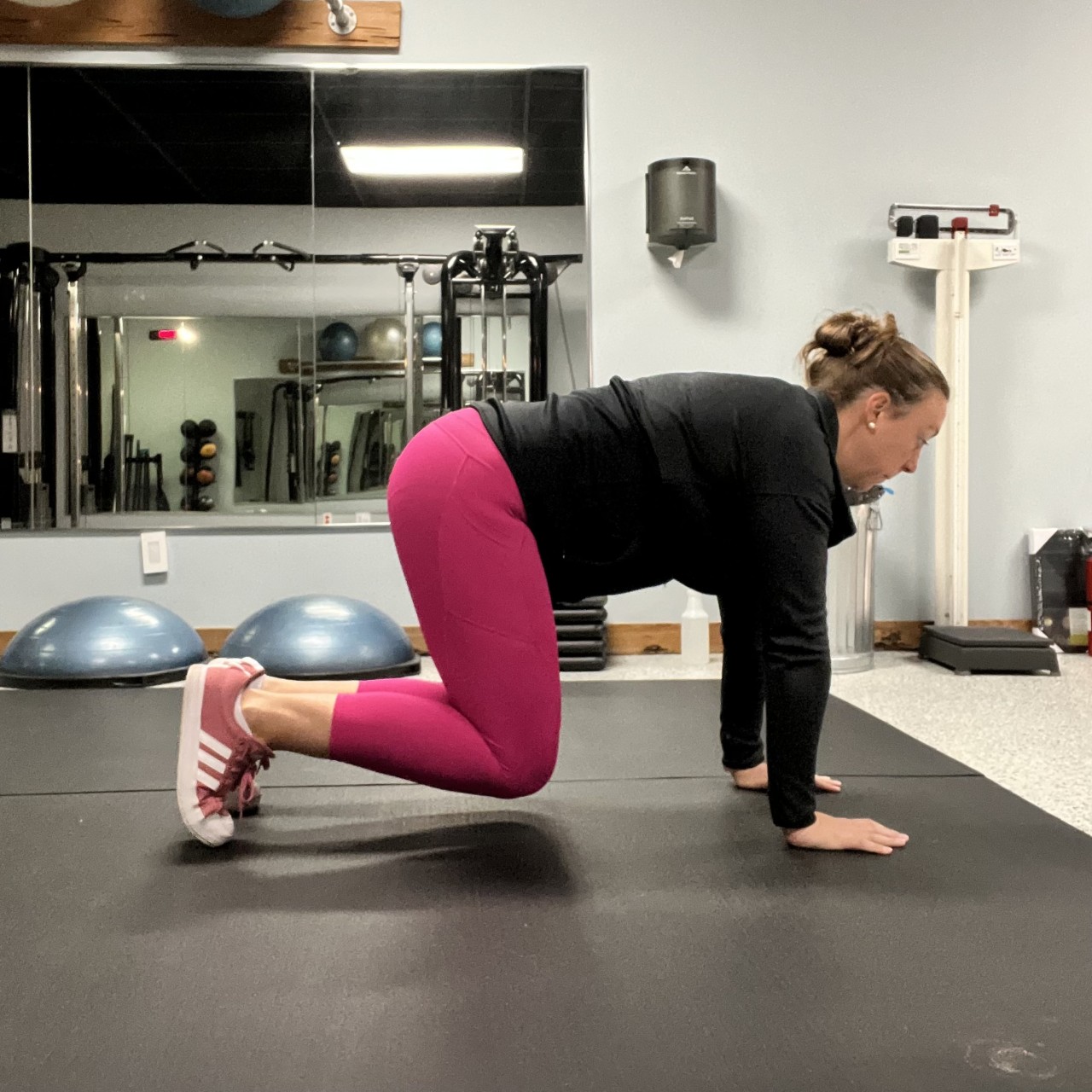
After pregnancy — or long periods of sitting — this balance often gets thrown off. Many women sit in an anterior pelvic tilt, where the pelvis tips forward, the low back arches more than it should, and the hamstrings become underactive. When that happens, the body often compensates with glute gripping or low back tension instead of true core support.
This exercise helps bring those systems back online together.
Why Breathing Is Part of the Exercise
Breathing isn’t just about relaxation — it’s a core strategy.
When you breathe with intention in this position, you’re encouraging the deep core muscles to engage alongside the hamstrings. Instead of forcing a pelvic tuck or bracing hard, the goal is to let the pelvis find a more supported position through muscle connection and breath.
This is especially important postpartum, when the core system has been stretched and needs retraining rather than aggressive strengthening.
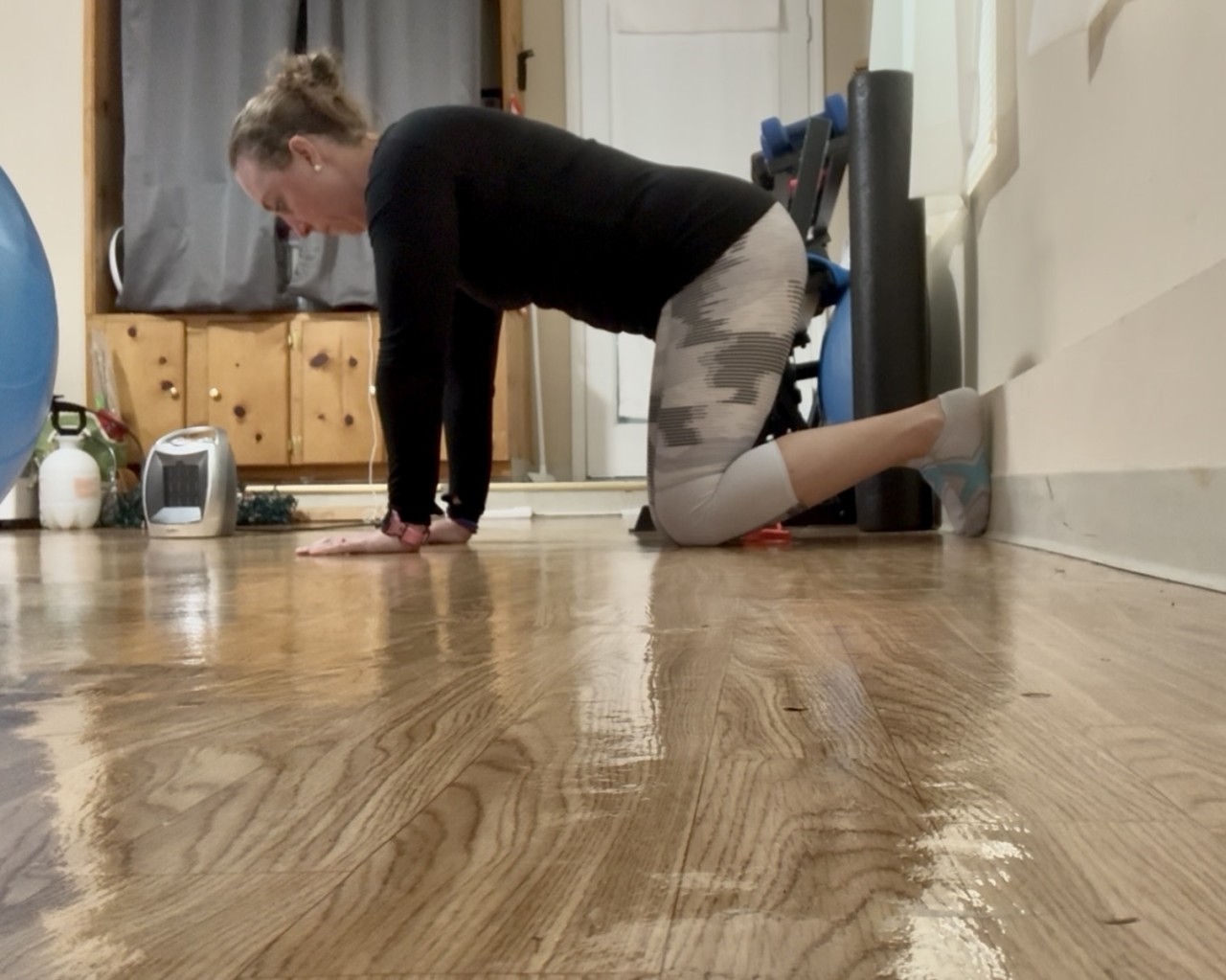
How to Do Hands and Knees Breathing With a Hamstring Drag
(You can watch the full video demo linked here for visual guidance.)
- Set up on hands and knees with shoulders stacked over wrists and hips over knees.
- Place the bottoms of your feet on a wall behind you.
- Gently press your feet into the wall as if you are trying to drag them upward — they won’t move, but you should feel tension in your hamstrings.
- Allow that hamstring tension to help your pelvis find a more neutral position without forcing it.
- From there, breathe slowly and intentionally, letting your lower abs and deep core respond to the breath.
- Focus on maintaining hamstring engagement while breathing, rather than squeezing glutes or arching the low back.
Start with short sets of controlled breaths and rest as needed.
Who This Exercise Is Helpful For
I often use this exercise for women who:
- Are newly postpartum and rebuilding foundational core support
- Sit a lot and notice excessive arching or anterior pelvic tilt
- Experience low back discomfort
- Struggle to feel their hamstrings during workouts
- Tend to grip their glutes instead of using their core and hips together
This movement builds awareness and control before progressing to more demanding strength work.
Why This Matters Before “Harder” Core Work
Jumping straight into traditional core or glute exercises without restoring this balance can reinforce compensation patterns. When the hamstrings and lower abs aren’t contributing, the low back often takes over — which can slow recovery or keep pain lingering.
This exercise teaches the body how to support the pelvis from both the front and back, creating a stronger foundation for everything that comes next.
Want More Exercises Like This?
If you’re working on core recovery, pelvic floor support, or getting back to exercise after pregnancy, my Pelvic Floor Essentials Guide walks you through foundational concepts and exercises that help your body reconnect — without overwhelm or guesswork.
👉 Grab the Pelvic Floor Essentials Guide here: PFE Guide
It’s designed to help you understand what your pelvic floor needs and how to support it as you return to movement and strength training.
Categories: : Breathing, Deep Core, Exercises, postpartum recovery
I have read and agree to the terms & conditions.