Long Lever Bridge for Postpartum Recovery: Pelvic Alignment, Hamstrings, and Core Strength
 Jen Landry
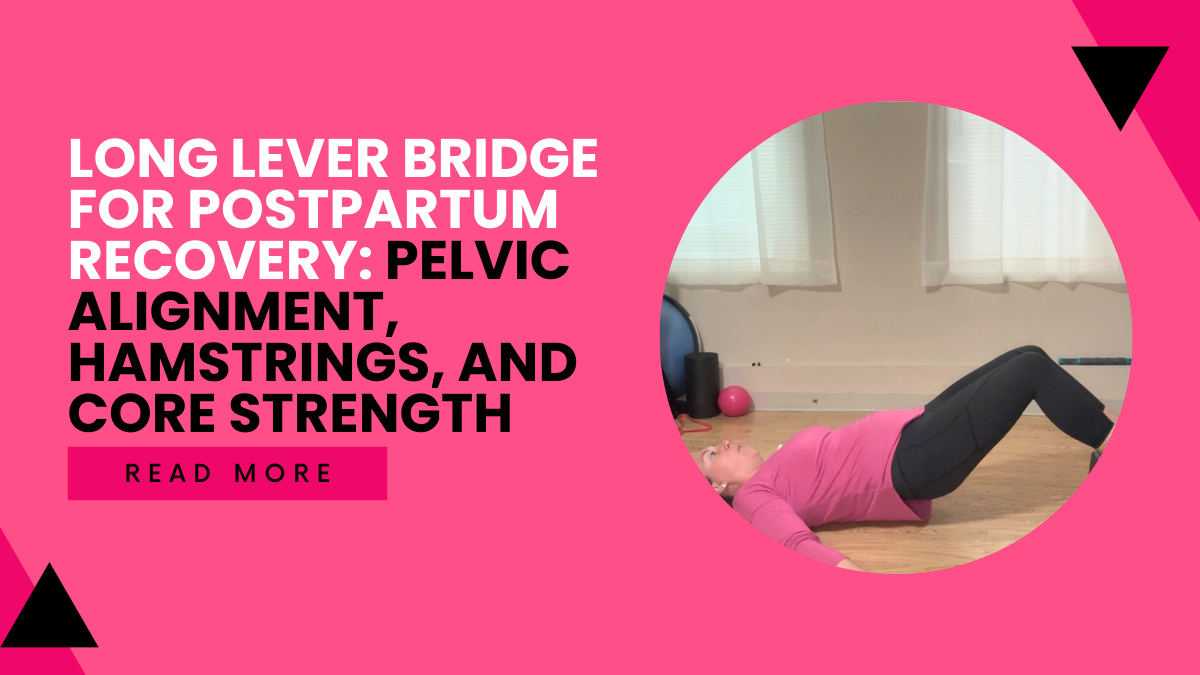
Strengthen proximal hamstrings postpartum to improve pelvic alignment, reduce back/hip pain, and help the core work more efficiently.
Why the Long Lever Bridge Matters for Postpartum Pelvis, Hamstrings, and Core
After pregnancy, many moms are told to “strengthen their core,” but very few are told where that strength should come from or why certain muscles matter more than others.
One commonly overlooked area is the proximal hamstrings—the part of the hamstrings that attach closer to the pelvis. During pregnancy, posture changes, growing bellies, and altered movement patterns often reduce how well these muscles contribute to pelvic stability. When that happens, the pelvis can shift out of a more neutral position, and the core often struggles to work efficiently.
This is where the long lever bridge becomes especially valuable.

Why Proximal Hamstring Strength Matters After Pregnancy
The hamstrings don’t just bend the knees. The portion closer to the pelvis plays a major role in pelvic orientation and stability.
When proximal hamstrings are underperforming, moms may experience:
- A pelvis that stays tipped forward or feels hard to “stack” under the ribcage
- Increased strain on the low back or SI joint
- Hip tightness that never fully resolves with stretching
- A core that feels weak, disconnected, or inconsistent during workouts and daily life
Strengthening this region helps gently guide the pelvis back toward a more neutral position. When the pelvis is better aligned, the deep core muscles can engage more naturally instead of constantly compensating.

How the Long Lever Bridge Supports Postpartum Core Strength
Core function is heavily influenced by what’s happening at the pelvis and ribcage. If the pelvis is pulled forward or unstable, the core often defaults to gripping, bracing, or checking out altogether.
By improving hamstring contribution near the pelvis, the long lever bridge can:
- Improve ribcage–pelvis alignment
- Reduce excessive arching through the low back
- Allow the core to engage with less effort
- Support better pressure management for the pelvic floor
This is especially important for moms dealing with back pain, pelvic discomfort, or lingering instability postpartum.

How to Perform a Long Lever Bridge (Postpartum-Friendly Setup & Cues)
This version changes the leverage compared to a traditional bridge, which is what increases the demand on the hamstrings closer to the pelvis.
Setup:
- Lie on your back with your feet on a slightly elevated surface (bench, step, couch, or sturdy box).
- Legs are straighter than a traditional bridge, but not locked out.
- Arms can rest by your sides.
Execution Cues:
- Drive your heels down into the surface.
- As you lift, think about your knees traveling forward and slightly toward your feet, rather than pushing them away.
- Keep your ribs and hips level and connected—think stacked, not flared.
- Avoid arching the lower back or lifting by squeezing the glutes aggressively.
- Pause briefly at the top while maintaining control, then lower with intention.
You should feel this higher up in the hamstrings, closer to where they meet the pelvis, rather than only in the glutes or low back.

Common Long Lever Bridge Mistakes After Pregnancy
- Over-arching the back: Often a sign the hamstrings aren’t doing enough of the work.
- Rib flare: Disconnects the core and reduces the benefit of the movement.
- Pushing through the toes: Shifts the work away from the hamstrings.
- Going too high: Height matters less than control and alignment.
Quality matters far more than range here.
Who the Long Lever Bridge Is Best For After Pregnancy
This variation is often useful for moms who:
- Feel stuck in an anterior pelvic tilt after pregnancy
- Have persistent low back or hip discomfort
- Struggle to feel their core engage despite consistent training
- Want strength work that actually carries over to daily life
As always, individual needs vary, and this is just one piece of a much bigger picture. But when used intentionally, it can be a powerful tool for restoring balance between the pelvis, hamstrings, and core.
If your workouts haven’t been translating into feeling better in your body, it’s often not about doing more—it’s about choosing movements that support how your body changed during pregnancy and postpartum.
Long Lever Bridge for Postpartum Pain Relief and Stability
For many moms, improving proximal hamstring strength can help reduce postpartum low back pain, hip pain after pregnancy, and SI joint discomfort. By supporting a more neutral pelvis and improving core coordination, the long lever bridge helps the body feel more stable and supported during both daily activities and strength training.
This is why intentional exercise selection—not random core or glute work—matters so much in postpartum recovery.
Categories: : Exercises, Pelvic Floor & Core Health, Postpartum, Workouts
I have read and agree to the terms & conditions.