Why the "Mom Pooch" Might Not Be What You Think (Hint: It’s Your Pelvis)
 Jen Landry

Stop sucking it in! Learn how Anterior Pelvic Tilt causes the "mom pooch" and how functional movement can help you heal your core and pelvic floor.
Let’s have a little "real talk" for a second. If you are scrolling through Instagram seeing influencers promising a "flat tummy in 5 minutes" while you’re sitting there wondering why your belly still sticks out—despite your best efforts at the gym or "eating clean"—I want you to take a deep breath. (A 360 breath, specifically, but we’ll get to that ).
The truth is, that "mom pooch" you’re frustrated with? It often isn't about body fat or a lack of crunches. As a PCES, I see this every day: it’s usually an alignment issue.
The Spilling Bowl: Understanding Anterior Pelvic Tilt
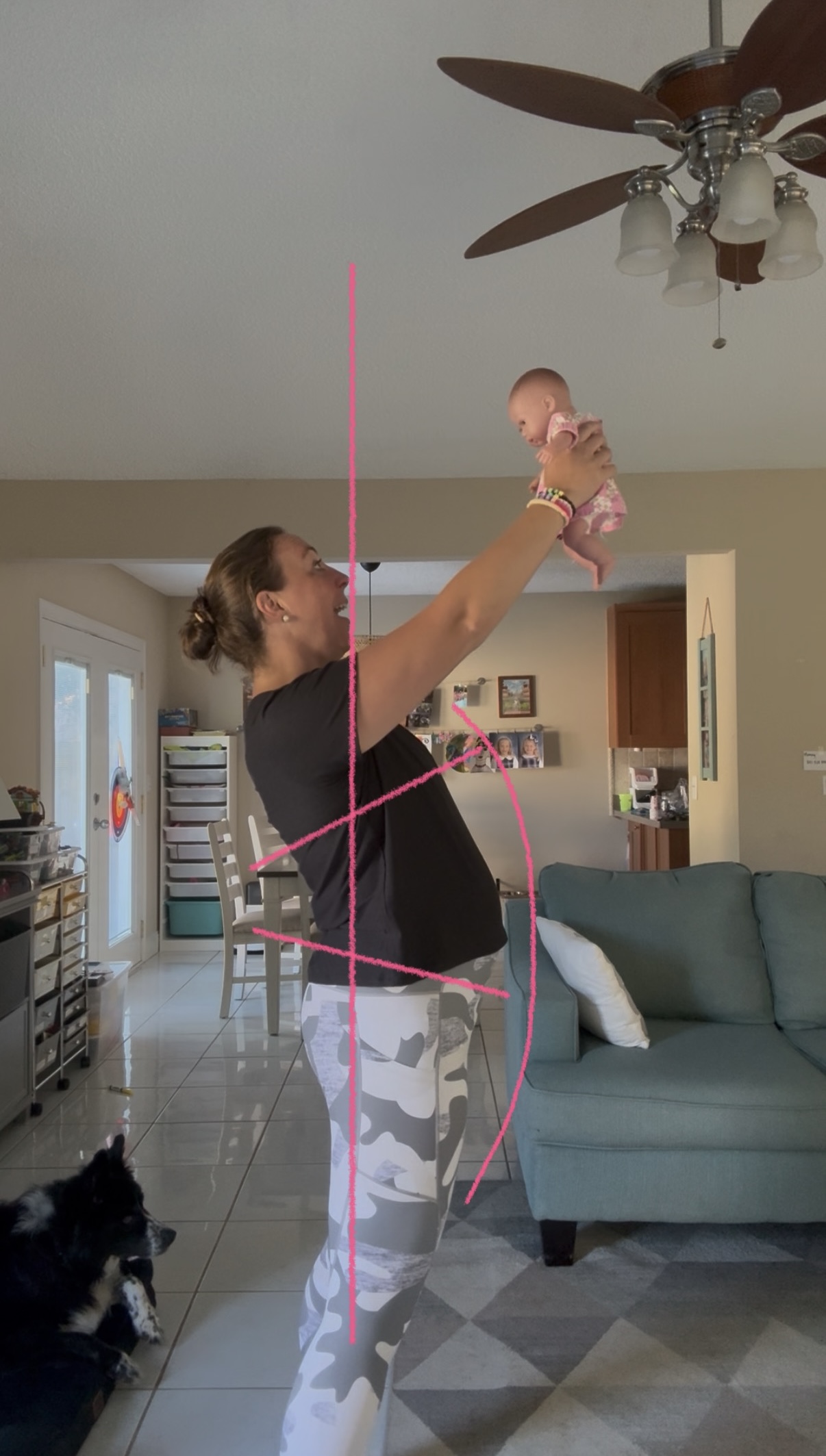
Imagine your pelvis is a bowl filled with water. In a neutral position, that water stays level. But for many of us—thanks to the way our bodies shift during pregnancy—that bowl starts to tip forward. This is called Anterior Pelvic Tilt (APT).
When your pelvis "spills water" out the front:
- Your lower back arches excessively (hello, back pain! ).
- Your abdominal muscles are literally stretched thin and lengthened.
- Because they are stretched, they can’t effectively manage intra-abdominal pressure.
The result? Your internal organs have nowhere to go but out, creating that visible pooch or even worsening Diastasis Recti (DR). It’s not that you’re "broken"; it’s just that your "bowl" is tipped.
Why Sucking It In Is Sabotage
I know the temptation. We’re at Publix or heading into a Starbucks, and we reflexively "suck it in" to look flatter. But here is a bit of "no-nonsense" expert advice: Stop sucking it in. 🛑
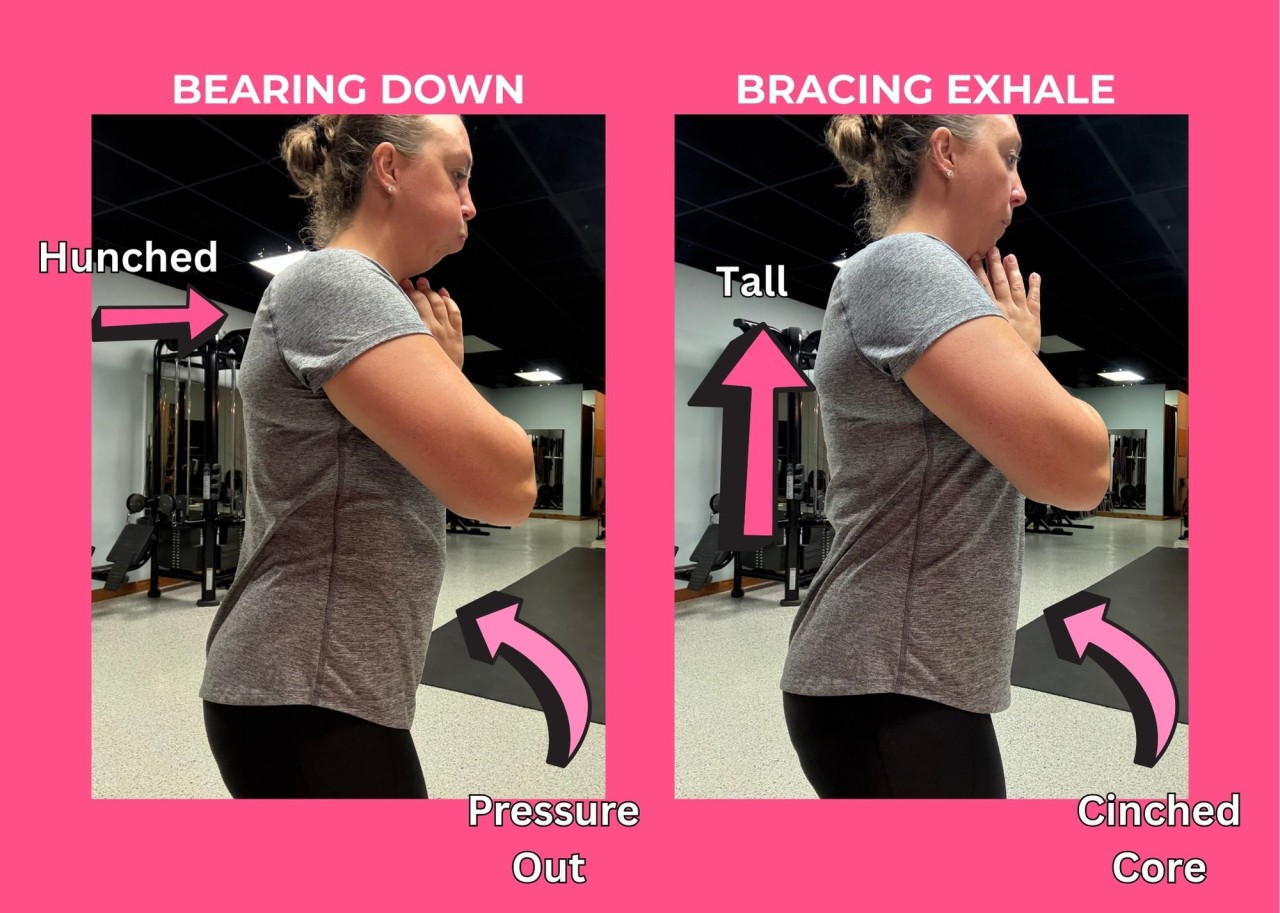
When you constantly grip your upper abs, you create a pressure cooker in your midsection. That pressure has to go somewhere. Usually, it goes down (hello, leaking ) or it pushes out against your abdominal wall. To heal, your core needs to be able to contract AND relax. If you’re always "on," you’re never actually functional.
Three Steps to Level the Bowl
We aren't looking for a "fitness aesthetic" here—we’re looking for a body that functions so you can play tag and swim with your kids without fear. Here’s how we start:
- Stack Your Ribs Over Your Hips: Instead of letting your chest flare up and your butt move back, try to keep your ribcage directly over your pelvis. This levels the "water bowl" and lets your core muscles actually do their job.
- Exhale Through Effort: Whether you're lifting a heavy stroller or groceries from the trunk, exhale as you lift. This helps manage the pressure so it doesn't push against your pelvic floor or your "pooch."
- 360 Breathing: Forget "belly breathing." Think about expanding your entire ribcage—front, sides, and back—as you inhale. This is the foundation of early intervention and core stability.
Move Like a Human, Not an Aesthetic
I’m an athlete and a mom of two, so I know the "in the trenches" reality of a tired body. But I also know that you don't need a "bounce back" plan; you need a functional recovery plan. You don't need to do a thousand Kegels (please, don't—they aren't the magic fix we were told they were).
You just need to learn how to move safely in real life. Because the goal isn't just to "look" fit—it’s to be the grandma who can still lift things and move with ease.
Ready to stop guessing and start healing? If you’re feeling overwhelmed by conflicting info, let's get back to the basics of how your body actually works. Download my Pelvic Floor Essentials Guide to start retraining your core and pelvic floor for real life.
Categories: : Pelvic Floor & Core Health, Postpartum
I have read and agree to the terms & conditions.