10 Things You Didn’t Know About Pregnancy and Postpartum Training
 Jen Landry
Discover 10 surprising facts about pregnancy and postpartum training that every mom needs to know to build lasting strength.
Welcome to the first post in a special 5-part series dedicated to redefining how we look at fitness during and after motherhood! Over the next few days, we are going to dive deep into my personal story, the biggest mistakes women make in their recovery, and exactly how you can bridge the gap between physical therapy and lifelong strength. But first, let’s start with some foundational truths. If you are a mom who wants to stay active, keep up with your kids, and feel strong for decades to come, there is a lot of conflicting information out there. Let's clear the air.
Here are 10 things you probably didn't know about pregnancy and postpartum training.
1. Pregnancy training is postpartum recovery.
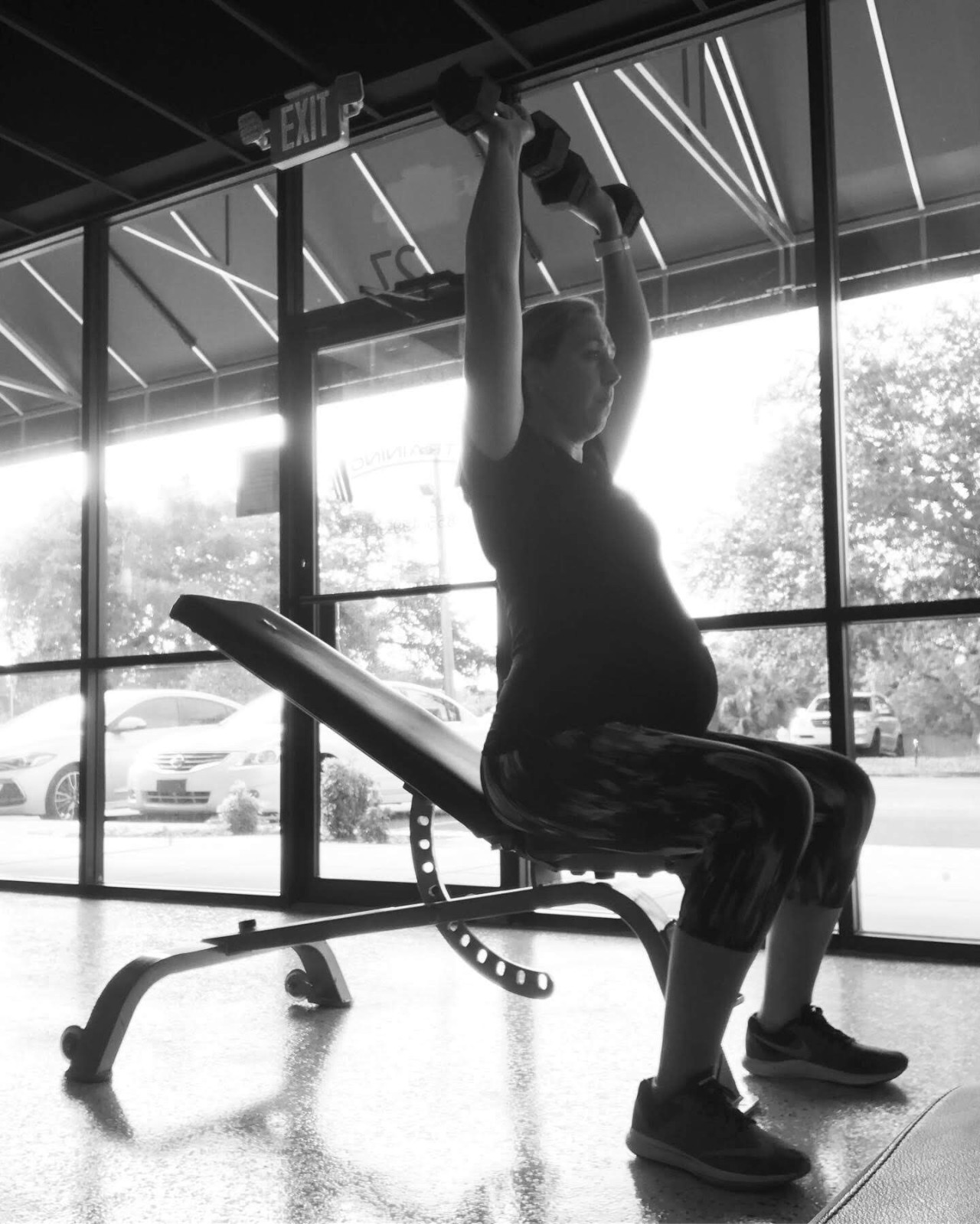
What you do during those nine months directly impacts how you heal afterward. Training during pregnancy isn't about hitting new personal records or maintaining your pre-baby physique; it is about preparing your body for the physical demands of labor and the immediate physical toll of motherhood. Proper training during this phase lays the groundwork for a smoother, more efficient postpartum recovery.
2. Diastasis recti is a guarantee but can be minimized.
Every woman experiences some degree of abdominal separation (diastasis recti) during a full-term pregnancy—your body quite literally has to make room for a growing human! However, the severity of this separation and how well the connective tissue heals postpartum can be significantly managed and minimized through proper core strategies and pressure management during your pregnancy.
3. Deep core (TA) connection is crucial.
Your transverse abdominis (TA) is the deep, corset-like muscle that wraps around your midsection. Learning how to properly connect with and activate this muscle is the secret to healing your core, supporting your lower back, and regaining true functional strength. Without a strong TA connection, traditional ab exercises can actually do more harm than good.
4. Pressure management is your best friend.
Whether you are lifting a dumbbell, picking up a toddler, or simply coughing, your core and pelvic floor have to manage intra-abdominal pressure. If you don't know how to distribute that pressure correctly, it seeks the path of least resistance—often leading to leaking, pelvic organ prolapse, or a bulging core. Learning to breathe and manage this pressure is a game-changer.
5. Posture in daily life matters.
You can do all the corrective exercises in the world, but if you spend the other 23 hours of the day standing with your hips thrust forward and your ribs flared, your progress will stall. How you hold your baby, how you stand at the kitchen counter, and how you sit in your car all play a massive role in your core and pelvic floor health.

6. Posture in workouts matters.
That same daily posture needs to translate into your workouts. A lot of women unknowingly utilize poor alignment when lifting weights or performing bodyweight exercises, which places unnecessary strain on the lower back and pelvic floor. Finding neutral alignment—your "stack"—ensures your muscles are working optimally and safely.
7. A tight muscle often means a weak muscle.
We often think that if our back or hips feel tight, we just need to stretch them more. In reality, a muscle often tightens up because it is weak and working overtime to stabilize a joint that lacks support. Stretching might provide temporary relief, but strengthening that muscle (and the surrounding stabilizers) is the long-term cure.
8. Prior to 6 weeks, you should know how to function in daily life.
The traditional "6-week clearance" from your doctor is not a green light to suddenly jump back into intense training. The first six weeks are about early rehabilitation. You need to know how to get in and out of bed, pick up your newborn, and breathe in a way that supports your healing body. Once you hit the 6-week mark, you aren't starting from scratch; you are simply continuing the foundation you've already been laying.

9. Going back to the basics doesn’t mean you're weak.
There is a massive mental hurdle to overcome when you realize you can't jump right back into your old workout routine. Stripping your workouts down to the absolute basics—focusing on breathing, alignment, and core activation—is not a sign of weakness. It is the smartest, strongest thing you can do to rebuild your body correctly.
10. A workout shouldn’t leave you trashed and spent.
The fitness industry has conditioned us to believe that a workout only "counts" if you are dripping in sweat and completely exhausted afterward. For pregnant and postpartum moms, this is a recipe for burnout and injury. A good workout should leave you feeling energized, strong, and capable of tackling the rest of your day, not wrecked.
Building a strong, functional body after babies doesn't require hours in the gym or destroying yourself in a puddle of sweat. It requires strategy. If you are ready to learn how to move beautifully, heal your core, and build lasting strength in just 30 minutes a few times a week, click here to check out my 4-week Fit Foundations course.
Categories: : Pelvic Floor & Core Health, Postpartum, Pregnancy, Programs
I have read and agree to the terms & conditions.