Leaking Isn't Permanent (Even If Your Group Chat Says Otherwise)
 Jen Landry
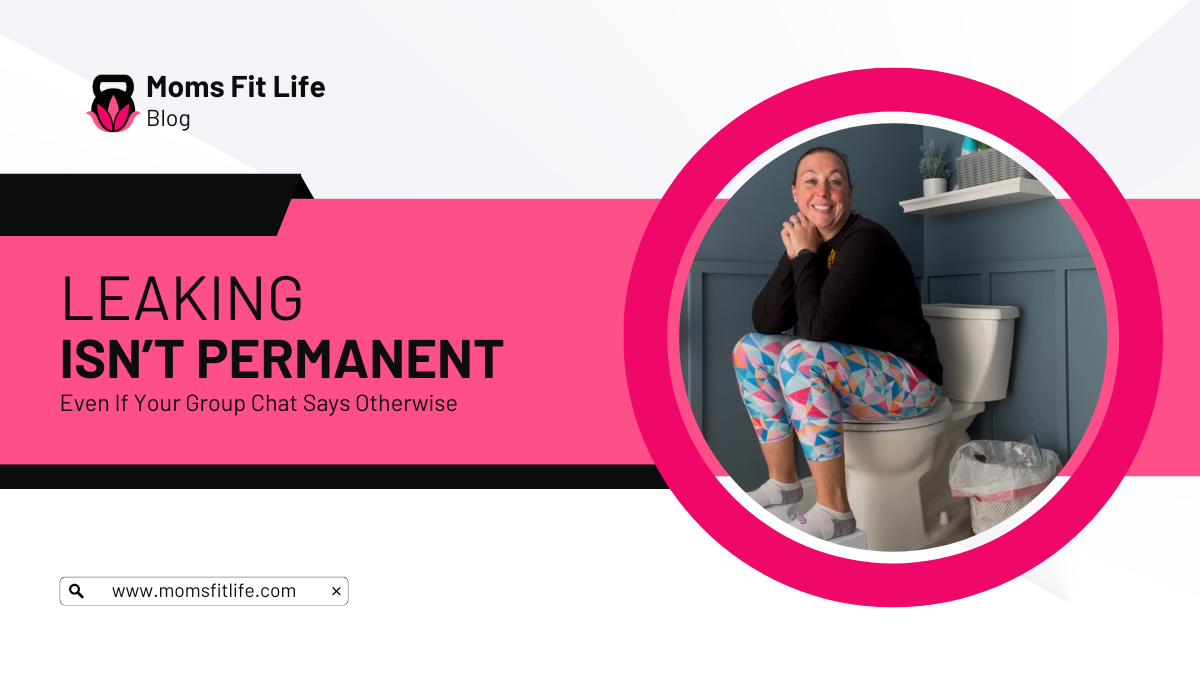
Leaking after baby might be common, but it isn't a normal part of motherhood. Learn why it’s a pressure management issue you can actually resolve.
If I had a dollar for every time someone told a pregnant woman, "Get used to it, you’ll never jump on a trampoline again," I’d be retired at a lake house by now.
We’ve been conditioned to think that leaking—specifically stress urinary incontinence—is just the "cost of admission" for motherhood. It’s the punchline of every "mom joke," and frankly, I’m over it.
While leaking is incredibly common, it is not normal. It is a symptom. Specifically, it’s a sign that your body is currently being overwhelmed and something is not working efficiently. The good news? You can work on this during pregnancy, at 6 weeks postpartum, or even 6 years postpartum.

The Myth of the "Weak" Pelvic Floor
The knee-jerk reaction when someone leaks is to tell them they need to "strengthen" their pelvic floor with a thousand kegels a day. However, I don't prescribe kegels. Kegels only teach the contraction of the pelvic floor, but learning to relax the muscle and take it through its full range of motion is much more important.
Often, the issue isn't that the pelvic floor muscle is weak; it’s that it’s overactive or "stuck" in a shortened state.
Imagine trying to use a bicep that is already curled halfway up- you can't get much power out of it.
If your pelvic floor is already holding on for dear life due to stress, posture, or the weight of a growing baby, it doesn't have the "range" to react when you sneeze, jump, or lift a bag of mulch for the garden.
The Core Pressure Connection
Leaking happens when the pressure inside your abdomen is too much for your system to handle. This internal pressure is directly affected by:
- Posture and alignment (in daily life and during heavy lifts)
- Poor pressure management (unequal distribution of force)
- Inefficient muscle coordination
By using 360 breathing, we can teach your ribs to expand and your diaphragm to move properly on an inhale, while improving the coordination of your core muscles on the exhale.

It’s a Skill, Not a Life Sentence
You aren't "broken." You are just navigating a system that needs a little recalibration.
We focus on movement and coordination so you can head to Chick-fil-A or take a walk downtown without scouting for the nearest bathroom every five minutes. It takes work and patience, but resolving postpartum leaking is absolutely possible.
You deserve to move with confidence, and it starts with realizing you don't have to just "deal with it.”
Ready to stop the leak? Grab the Pelvic Floor Essentials Guide now!
Want to explore further?
- Back to: 7 Things to Know Before Baby
- Next Up: Pelvic Floor Work is Core Work
- Another Helpful Resource: 7 Postpartum Essentials Every Mom Should Know
Categories: : Deep Core, Pelvic Floor & Core Health, Pregnancy
I have read and agree to the terms & conditions.