Why "Welcome to Motherhood" Is the Most Harmful Thing You Can Say to a Mom
 Jen Landry
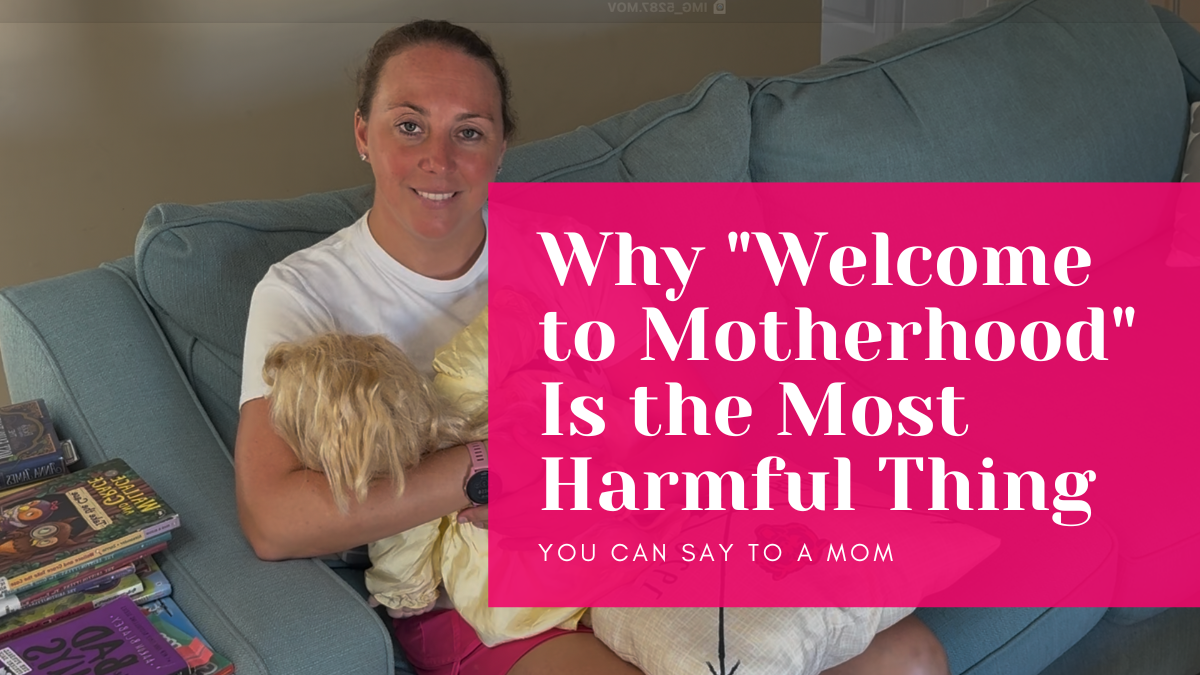
Stop accepting mom pain and dismissal as normal. Learn why "welcome to motherhood" is a harmful cliché and how to get real solutions.
When you decide to have children, something subtle yet profound happens to the way society views your health. The moment you enter motherhood, the expectation shifts. Suddenly, any complaint, pain, or struggle you voice is met with a collective shrug and a canned response.
We try to speak up—whether to friends, family, or even healthcare providers—and we are consistently met with dismissal disguised as reassurance.
Look at the subtext behind what we’re routinely told when we express real physical or emotional distress:
1. "Welcome to motherhood!"
- What you say: "I pee my pants when I laugh or jump."
- The translation: "You should simply accept this and not complain." When pelvic floor dysfunction is treated as an inevitable punchline, moms stop asking for help. We are taught that leaking when we run, jump, or laugh with our kids is just our new reality, rather than a sign that our core and pelvic floor need proper pressure management and dynamic support.
2. "Everyone goes through it."
- What you say: "My back has been killing me."
- The translation: "Struggling is a badge of honor, not something fixable." We live in a culture that glorifies the self-sacrificing mother. If you aren't exhausted, aching, and pouring from an empty cup, are you even doing it right? By framing back pain and bodily dysfunction as a universal rite of passage, we strip away the idea that these issues are fixable through intentional movement and corrective care.
3. "It’s just a phase; you’ll get time eventually."
- What you say: "I don't have time to work out or take care of myself."
- The translation: "Your daily suffering doesn't need support." Dismissing a mom's lack of time or capacity as a "phase" minimizes the real operational strain she is under. It tells her that her present-moment physical well-being is secondary, and that taking twenty minutes to move her body or restore her strength is a luxury rather than a necessity. This also means partners or other caregivers feel that you don't need help.
4. "It’s all in your head."
- What you say: "I feel so... off."
- The translation: "There’s no quick explanation, so stop looking for one." This is perhaps the most harmful response of all. When an intuitive feeling that something isn't right gets brushed off, it gaslights moms into doubting their own bodily awareness.
Common Does Not Mean Normal
We need to stop confusing frequency with function. Just because millions of mothers experience pelvic floor leaks, chronic back tightness, constant fatigue, or feeling disconnected from their bodies does not mean it is normal—and it certainly doesn't mean you have to accept it as your baseline.
You chose to be a mom. You did not choose to spend the rest of your life in pain or physical dysfunction. Choosing motherhood does not mean your body no longer deserves care, restorative movement, and real solutions.
Changing the Narrative
If you’ve been told to "just accept" symptoms that disrupt your everyday life, this is your reminder to keep advocating for yourself.
- Listen to your body’s signals. Pain, pressure, and leaking are messages, not permanent conditions.
- Reject the badge of honor. Suffering through pain doesn't make you a better mom; feeling strong and capable allows you to show up fully for your life.
- Seek dynamic, root-cause support. Whether it's restoring 360-degree breathing, learning proper pressure management, or finding movement that actually fits your life right now, real help exists.
You deserve more than dismissive clichés. You deserve to feel good in your body again.
Categories: : Postpartum, Self-Care
I have read and agree to the terms & conditions.